


The Hundred Years' War on Palestine – Sophisticated Gift for the Well-Read, Elevated Hardcover with Ottoman-Era Archival Detail
The Hundred Years' War on Palestine – Sophisticated Gift for the Well-Read, Elevated Hardcover with Ottoman-Era Archival Detail
Couldn't load pickup availability
Why you'll love it
- written by a preeminent Palestinian-American historian with primary source access
- presents the conflict from a historically marginalized Palestinian perspective
- structured chronologically across six definitive wars for clear narrative arcs
- draws on family archives and Ottoman-era documents unavailable in Western historiography
- balances scholarly rigor with accessible prose for non-academic readers
- contextualizes current events within a century-long historical framework
Perfect for
- deep dive into the origins of the Israeli-Palestinian conflict
- supplementary reading for Middle East history or political science courses
- book club discussion on contested historical narratives
- research reference for journalists and policy analysts
- personal study of colonialism and resistance movements
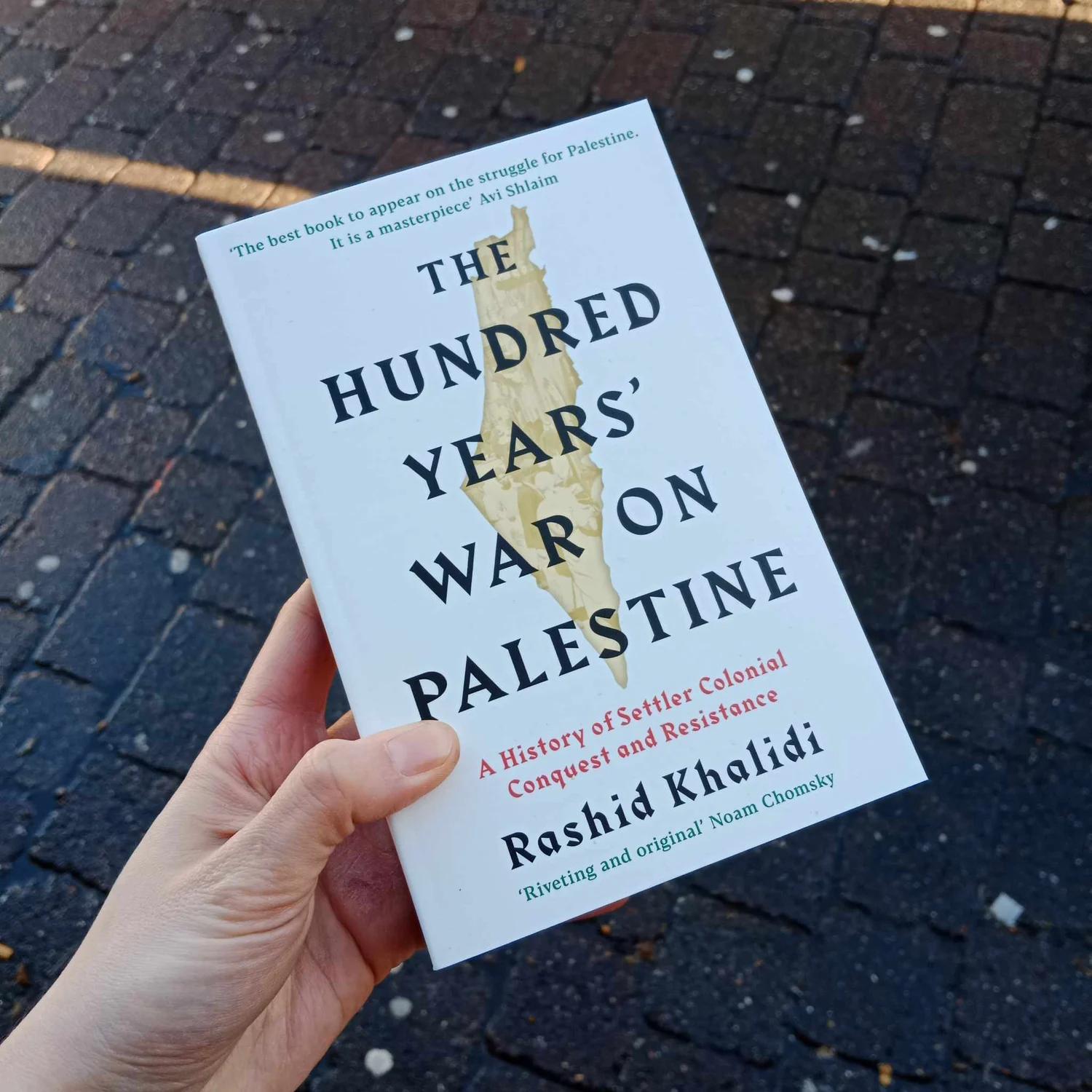
A landmark history of one hundred years of war waged against the Palestinians from the foremost US historian of the Middle East, told through pivotal events and family history
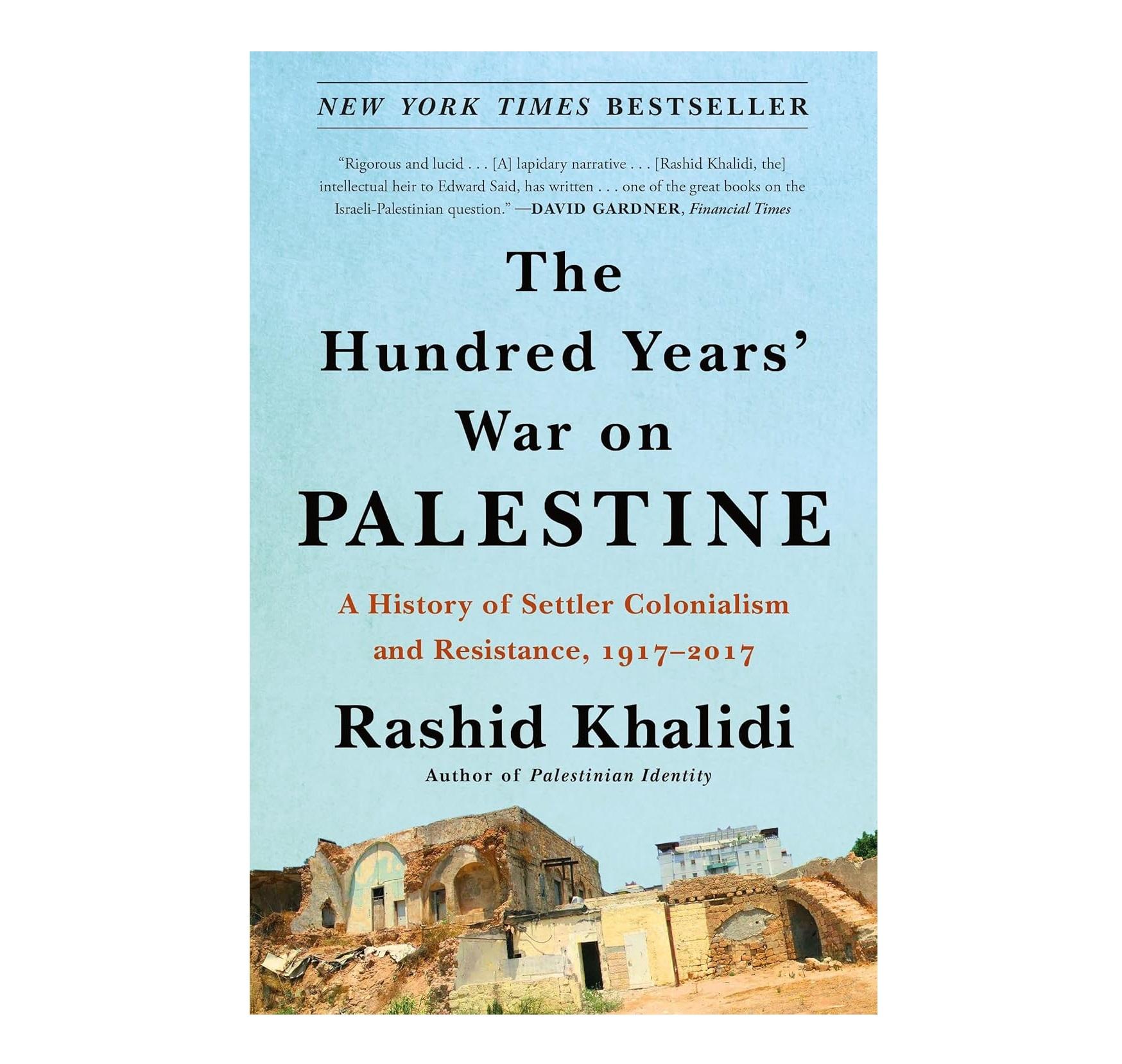
In 1899, Yusuf Diya al-Khalidi, mayor of Jerusalem, alarmed by the Zionist call to create a Jewish national home in Palestine, wrote a letter aimed at Theodore Herzl: the country had an indigenous people who would not easily accept their own displacement. He warned of the perils ahead, ending his note, “in the name of God, let Palestine be left alone.” Thus Rashid Khalidi, al-Khalidi’s great-great-nephew, begins this sweeping history, the first general account of the conflict told from an explicitly Palestinian perspective.
Frequently Asked Questions
Does the hardcover edition justify a premium price compared to paperback alternatives?
Yes. The hardcover edition from Metropolitan Books offers a more durable, dignified format suited to a curated home library, and it is the preferred binding for collectors and readers who value presentation and longevity.
Is the book published by a reputable imprint appropriate for a premium collection?
Yes. It is published by Metropolitan Books, an established imprint of Henry Holt, one of the most respected names in American literary publishing, lending the volume considerable prestige in a private collection.
Does the book's scholarly apparatus add to its value as a reference piece?
Yes. The book includes endnotes and a historical timeline, giving readers a permanent scholarly reference rather than a one-time read, which enhances its long-term value on a library shelf.
Will this book stand up to repeated handling and re-reading over the years?
The hardcover binding is designed for durability, and the book's depth and archival detail reward repeated reference, making it a long-lasting addition to any serious home library.
Does the book's archival foundation distinguish it from other premium history titles?
Yes. The author's access to Ottoman-era documents and personal family archives provides primary source material rarely found in Western historiography, making this a singular and distinguished volume among premium history titles.
Is this book appropriate for a curated reading room or study?
Yes. Its authoritative voice, hardcover format, and Metropolitan Books imprint make it a natural centerpiece for a refined reading room, study, or personal library.
Does this book qualify as a collector's item for serious readers of Middle East history?
Yes. Written by one of the most recognized Palestinian-American historians of his generation, this volume holds a permanent place in the canon and is considered a collector's title in Middle East historiography.
Will this book hold its value as a long-term reference in a premium home library?
Yes. Because of the author's stature, the publisher's reputation, and the depth of original research, this volume retains relevance and reference value for decades rather than becoming dated quickly.
Is this a fitting book to display in a well-appointed office or study?
Yes. The hardcover binding and authoritative subject matter present a sophisticated, professional appearance well suited to a desk, credenza, or library shelf in a private office or study.
Does the single-volume format make this book more desirable than multi-volume histories?
Yes. A comprehensive single-volume history spanning 1917 to the present offers completeness and accessibility that multi-volume sets cannot match, especially for readers who want one definitive reference rather than a shelf of partial treatments.
How does this book compare to other premium hardcover histories on the Israeli-Palestinian conflict?
Few single volumes combine Khalidi's archival access, Palestinian-centered perspective, chronological clarity, and Metropolitan Books production quality, making this a distinctive choice among premium hardcover histories on the subject.
How does this compare to a luxury coffee table book on Middle East history?
Unlike image-driven coffee table books, this volume offers serious scholarship with archival depth, endnotes, and a structured narrative, making it a more enduring and authoritative presence in a refined library.
How does this compare to premium subscription-based history services or courses?
A single hardcover volume provides a permanent, citable, and tactile reference that digital subscriptions cannot replicate, and Khalidi's work is widely considered foundational reading on the subject.
Is the price of this book reasonable for the scholarly depth and production quality?
Yes. Given the depth of primary source research, the author's reputation, the inclusion of scholarly apparatus, and the hardcover production from a major imprint, most readers and collectors find the price justified.
What if I am unsure whether the recipient values Palestinian-centered history?
This book is best suited for recipients who actively engage with Middle East history, decolonization studies, or political analysis. For such readers, it is considered a high-value, deeply respected addition to their library.
Is this book too politically focused for a general luxury gift?
It is a serious work of history rather than a partisan text, and it is widely read in academic, journalistic, and policy circles. For a recipient with intellectual interests, it is considered a sophisticated and respected gift choice.
What time period does the book cover?
The Hundred Years' War on Palestine is a single-volume history that spans from 1917 to the present, contextualizing current events within a century-long historical framework.
How is the book organized?
The book is structured chronologically around six major Arab-Israeli wars, providing clear narrative arcs that help readers trace the evolution of the conflict across generations.
How should I approach reading this book for the first time?
Many readers benefit from reading the book cover to cover for the chronological narrative, then returning to specific chapters as reference material for current events, courses, or research projects.
Is this book suitable as a course textbook or supplementary reading?
Yes. It is widely used as supplementary reading in Middle East history and political science courses, and its endnotes, timeline, and archival foundations make it appropriate for academic study.
Does the book include endnotes and references for research purposes?
Yes. The book includes a scholarly apparatus with endnotes and a historical timeline, supporting its use as a research reference for students, journalists, and policy analysts.
What is included when I receive the book?
The hardcover edition includes the main narrative, endnotes, and a historical timeline. No additional materials are required to begin reading; readers may wish to keep a notebook for following the chronology.
Is the content balanced and historically grounded?
The book is widely recognized for its scholarly rigor, drawing on Ottoman-era documents, British Mandate records, and personal family archives to ground its narrative in primary sources.
Will this book remain relevant as new events unfold in the region?
Yes. Because the volume contextualizes current events within a century-long framework and is built on durable archival foundations, it remains a reference point for understanding ongoing developments.
How is this book different from a general history of the Middle East?
Unlike broad regional surveys, this book focuses specifically on the Palestinian experience of the conflict, drawing on rare archives and centering a perspective often marginalized in Western historiography.


