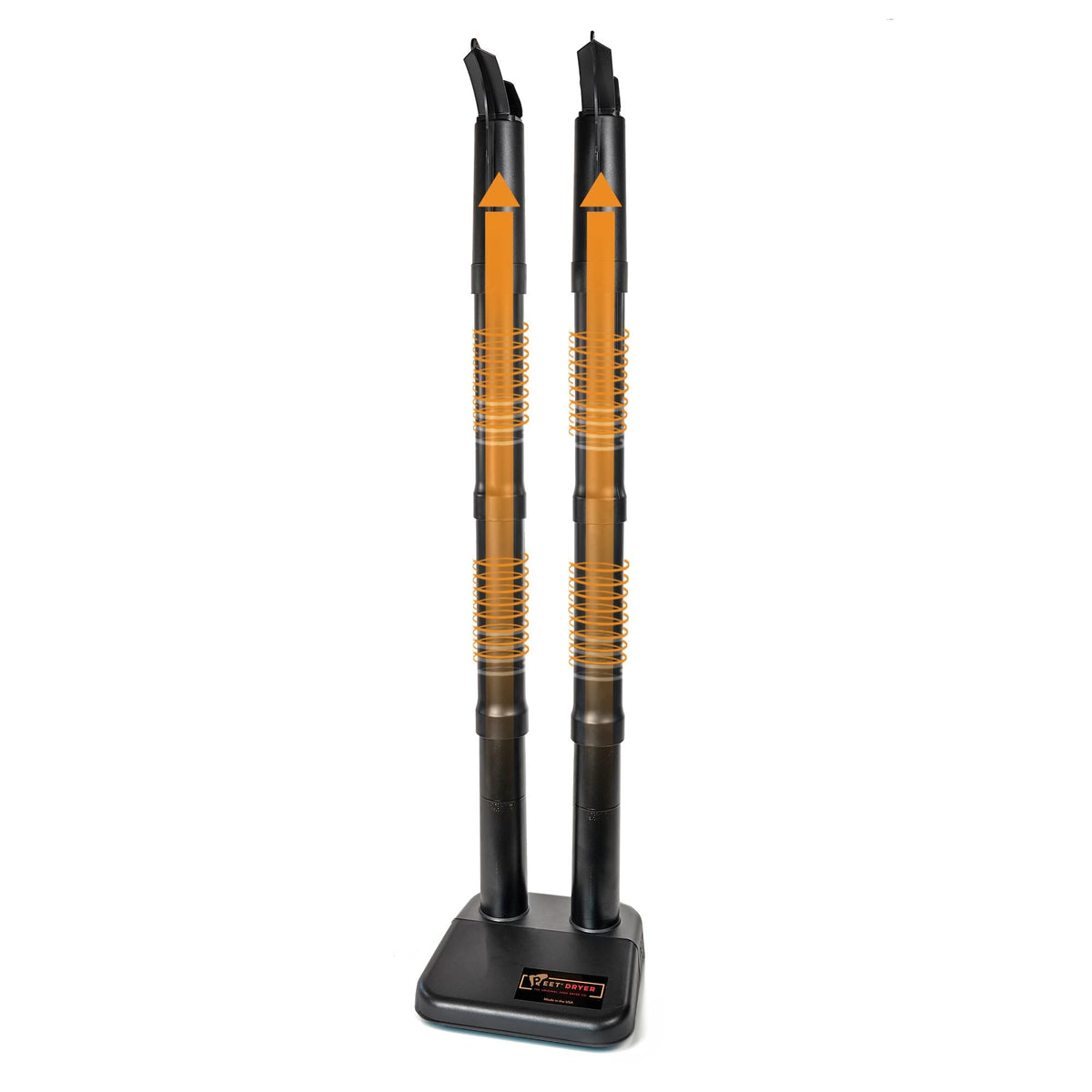
PEET Portable Boot Dryer – Weather-Resistant Overnight Drying for Car Camping, Barns, and Mudrooms
PEET Portable Boot Dryer – Weather-Resistant Overnight Drying for Car Camping, Barns, and Mudrooms
Couldn't load pickup availability
Why you'll love it
- silent thermal drying means it can run all night in a bedroom or mudroom without disturbing sleep
- low-wattage energy-efficient design makes it safe to leave plugged in for hours
- specialized variants (Wader, XL) solve problems generic boot dryers cannot
- removes odor-causing bacteria and moisture rather than just masking smell
- Made in USA build quality signals durability for users who depend on gear daily
- portable plug-in design needs no batteries, fuel, or maintenance
Perfect for
- drying sweat-soaked steel-toe work boots overnight after a long shift
- drying neoprene waders after a day of cold-water fishing
- removing overnight moisture and odor from hiking boots between multi-day treks
- rotating athletic cleats and ski boots dry between practices or games
- extending the lifespan of expensive leather or specialty footwear by preventing mold and bacteria


PEET, Original Dryer, Electric Shoe Dryer, Effective Drying for Work Boots & Outdoor Gear, Athletic Gear, Portable, Silent & Energy-Efficient, Made in USA
Frequently Asked Questions
Can I use the PEET Original boot dryer outside on a covered porch or in a job-site trailer?
Yes. The PEET Original is a plug-in thermal dryer with no moving parts, so it works reliably in covered outdoor spaces like porches, barns, carports, trailers, and boathouses. Just make sure the outlet is sheltered from direct rain and moisture.
Will the PEET dryer handle muddy, rain-soaked boots after a day on the trail or in the field?
Absolutely. The low-watt convection element runs for hours without overheating, pulling moisture out of saturated leather, neoprene, and synthetic uppers. Most users leave boots on overnight and find them dry and ready by morning.
Is the PEET dryer portable enough to pack for a camping or hunting trip?
Yes. The Original base unit is compact and lightweight, and it runs on any standard 110V outlet. Many hunters, anglers, and outfitters keep one in their cabin, camper, or truck for end-of-trip drying.
Does the PEET dryer work in cold or unheated outdoor rooms like a garage or shed?
Yes. Because it generates its own gentle thermal heat, the PEET performs well in unheated mudrooms, garages, and barns. The low-watt design is safe to leave running for many hours in these spaces.
Can the PEET Wader variant dry full neoprene chest waders after a cold-water fishing trip?
Yes. The Wader Dryer has extended ports specifically sized to insert into tall neoprene waders, drying the inside lining where moisture and odor-causing bacteria collect after a long day on the water.
I'm a rancher with multiple workers — will the PEET keep up with daily heavy use outdoors?
Yes. The PEET is Made in USA with no moving parts, so it is built for daily, long-hour use. Many crews leave it plugged in 24/7 in the mudroom to rotate boots, gloves, and work gear.
Will the PEET leave a chemical smell that attracts wildlife or bugs at a hunting camp?
No. The PEET uses clean thermal convection with no fumes, sprays, or chemical deodorizers, so it won't introduce foreign scents near your gear or living area.
Is the PEET better than stuffing newspaper into boots after a hunt or hike?
For overnight drying, yes. Newspaper absorbs surface moisture quickly but can't pull dampness from deep in the lining, and it has to be replaced. The PEET runs silently for hours, drying boots more thoroughly with zero effort.
Can I use the PEET on a picnic table or patio without worrying about a hot surface?
Yes. The exterior of the PEET stays only mildly warm during use and there is no open flame or exposed heating coil, so it can sit on a flat outdoor surface without scorching or fire risk.
How long has the PEET been trusted by outdoor workers and sportsmen?
PEET dryers have been Made in USA for decades and are widely used by tradesmen, hunters, anglers, skiers, and competitive athletes who depend on dry gear every single day.
Will running the PEET in a damp boathouse cause any electrical issues?
No. The PEET uses a sealed, low-watt heating element designed for extended use. As with any electrical appliance in a damp space, simply plug it into a properly grounded outlet and keep the connection sheltered from direct splash.
What if my boots are still wet from rain — will overnight drying really be enough?
For most lined work boots, hiking boots, and athletic shoes, yes. For heavily saturated neoprene waders, you may want to wipe them down first and allow a second overnight cycle for the deepest layers.
Is the PEET loud enough to scare fish or wildlife near an open cabin or tent?
No. The PEET is completely silent — no fan, no blower, no clicking — so it can run quietly in a cabin, tent platform, or fish camp without disturbing anything around you.
Can I use the PEET to dry other outdoor gear like gloves or hats?
Yes. Many users drape small items like gloves, insoles, and hats over the drying ports. The gentle thermal heat works on most fabric and leather pieces used outdoors.
Does the PEET work in a pop-up camper or RV with limited power?
Yes. The low-watt design draws minimal electricity, so it is well-suited to RV and camper circuits, including overnight use on battery or inverter setups for shorter cycles.
Will the PEET work in extreme cold like a frozen ice-fishing shanty?
It performs best in sheltered spaces above freezing, but many users run it in cold garages, porches, and shanties. The element warms the air inside the boot, so drying is more about time than ambient temperature.
How do I set up and start using the PEET Original boot dryer?
Setup takes about a minute. Remove the PEET from the box, place it on a flat surface near a standard 110V outlet, plug it in, and slide your footwear onto the drying ports. There are no switches, timers, or apps to configure — it begins warming immediately.
How long does it take the PEET to fully dry a pair of boots?
Most work boots, hiking boots, and athletic shoes dry overnight in 6–10 hours. Heavily saturated boots, neoprene waders, or thick ski boot liners may take two overnight cycles for the deepest moisture to release.
Can I leave my boots on the PEET longer than overnight without damaging them?
Yes. The low-watt element is designed for extended use and will not over-dry or damage leather, synthetics, or insulation. Many users leave boots on the PEET 24/7 and simply rotate pairs as needed.
Will the PEET work with steel-toe work boots, rubber boots, and pac boots?
Yes. The Original base unit fits most standard boots. For taller pac boots, ski boots, and snowmobile boots, the Original XL extension tower adds height so the drying ports reach the toe box for full coverage.
Is the PEET Wader Dryer compatible with neoprene chest waders and hip waders?
Yes. The Wader Dryer is purpose-built with extended ports sized to fit inside neoprene waders, drying the inner lining where moisture and bacteria accumulate after a day of cold-water fishing.
What is included in the box when I order a PEET dryer?
Each PEET ships with the main drying unit, an instructional insert, and is ready to plug in and use. No batteries, filters, or accessories are required for everyday operation.
Is the PEET safe to leave plugged in continuously?
Yes. The PEET is engineered for unattended, long-duration use with a sealed, low-watt heating element and no moving parts. As with any electric appliance, plug it directly into a properly grounded outlet.
How long does a PEET dryer typically last?
With no moving parts to wear out, a PEET dryer commonly lasts for many years of daily use. The Made in USA construction is specifically designed for tradesmen, athletes, and outdoorsmen who depend on their gear every day.
What is the difference between a thermal boot dryer and a fan-based boot dryer?
Thermal dryers like the PEET use gentle, silent convection heat with no fan, making them quiet enough for bedrooms and safe for long-duration drying. Fan-based dryers move air through the boot with a blower, which adds noise, can overheat leather, and introduces moving parts that wear out over time.