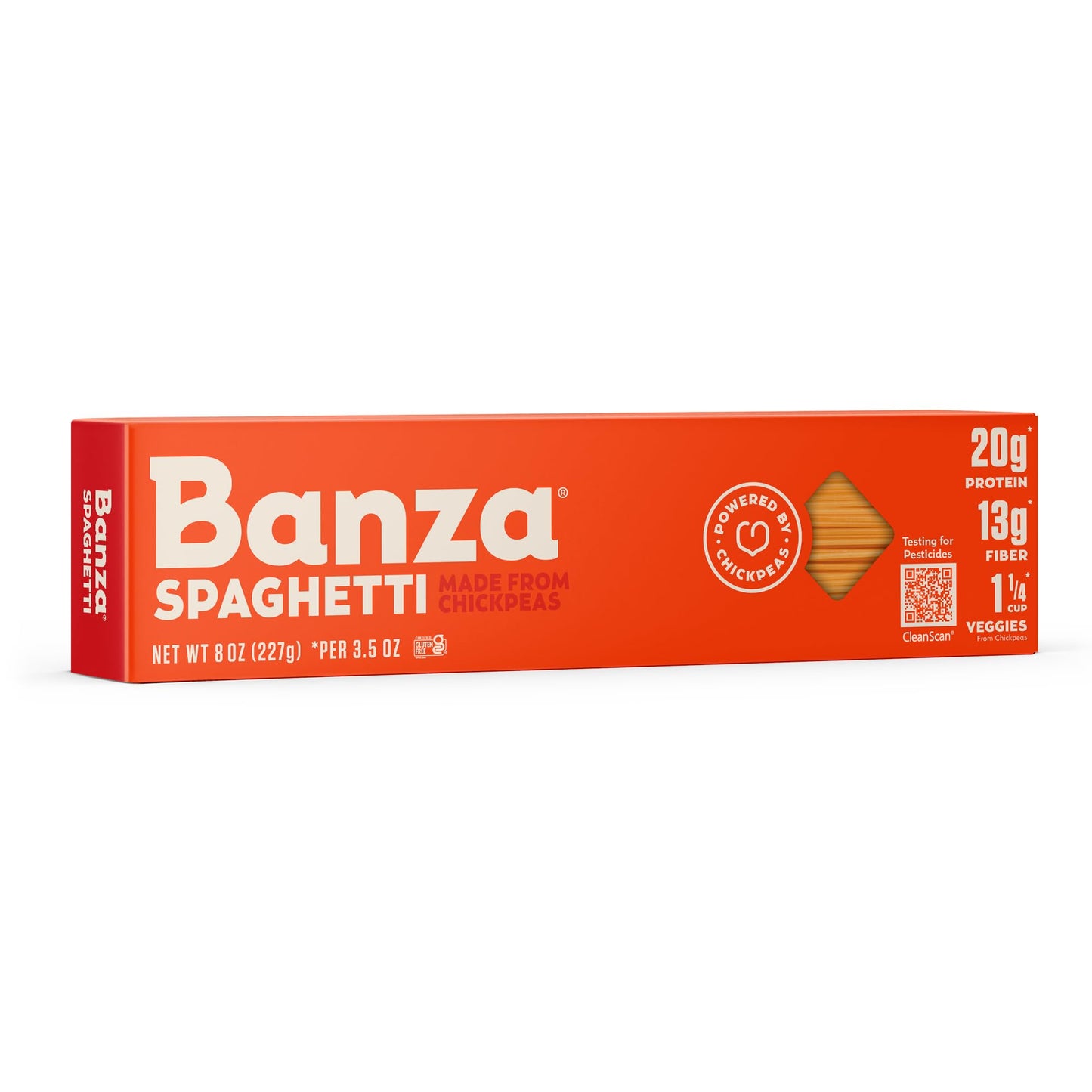
Banza Chickpea Spaghetti - High-Protein Gluten-Free Pasta for Clean Eating and Wellness Routines
Banza Chickpea Spaghetti - High-Protein Gluten-Free Pasta for Clean Eating and Wellness Routines
Couldn't load pickup availability
Why you'll love it
- Higher protein than traditional wheat pasta supports muscle and satiety goals
- Gluten-free formulation accommodates celiac and sensitivity diets without sacrificing a familiar shape
- Lower carb profile fits low-carb and diabetic-friendly eating patterns
- Same spaghetti shape and cooking method means easy 1:1 swap in favorite recipes
- Clean ingredient list (chickpeas, pea starch, tapioca, xanthan gum) appeals to clean-label shoppers
- Pack-of-5 bulk option reduces cost per serving and prevents stockouts for frequent pasta households
Perfect for
- High-protein spaghetti dinner swap for traditional wheat pasta
- Gluten-free weeknight family meal for celiac or sensitive eaters
- Lower-carb pasta base for fitness-focused meal prep
- Plant-based protein anchor for vegetarian dinners
- Quick pantry staple for last-minute healthy meals


Product Information
Grocery
Chickpea Pasta
Banza Pasta
Banza Chickpea Pasta – High Protein Gluten Free Healthy Pasta – Spaghetti (8 oz.)
Ingredients
Chickpeas, Pea Starch, Tapioca, Xanthan Gum
Items Details
Frequently Asked Questions
How does the chickpea base support my clean-eating or wellness routine?
Banza Spaghetti is built from chickpeas rather than refined wheat semolina, so each serving delivers meaningful plant-based protein and fiber without the fillers common in standard pasta. The short ingredient list — chickpeas, pea starch, tapioca, xanthan gum — fits cleanly into clean-label and whole-food eating patterns.
Is this pasta suitable for someone following a lower-carb lifestyle?
Yes. Banza Spaghetti delivers a lower net carb count per serving than traditional semolina spaghetti, making it a comfortable fit for low-carb, diabetic-friendly, and carb-conscious eating patterns while still giving you a familiar plate of spaghetti.
Can I use Banza in my regular spaghetti recipes without changing my wellness macros?
You can swap it 1:1 in nearly any spaghetti recipe. Because the protein and carb profile is meaningfully different from wheat pasta, you may actually find your macros improve — more protein, fewer net carbs — with no recipe rework required.
Is this a good pasta for someone managing gluten sensitivity or celiac disease?
Yes. Banza Spaghetti is certified gluten-free and made without wheat, so it is safe for celiac diets and gluten-sensitivity lifestyles. You still get the familiar spaghetti shape and cooking experience.
Does the clean ingredient list include any allergens I should know about?
The ingredient panel is intentionally short — chickpeas, pea starch, tapioca, and xanthan gum — and is free from artificial additives. The product is gluten-free but is made in a facility that may process other allergens, so always review the package label for the most current allergen information.
I'm rebuilding my pantry around wellness staples — is Banza a good staple to keep on hand?
It is an excellent long-term staple. The familiar spaghetti shape means you'll actually use it, the clean ingredient panel supports your wellness standards, and the pack-of-5 option keeps your pantry stocked so you never have to substitute with a less-aligned pasta.
Will this pasta help me feel fuller on fewer calories?
The higher protein and fiber content from the chickpea base helps support satiety, which is one of the main reasons wellness-focused home cooks reach for Banza over standard semolina spaghetti.
Is Banza a good fit for a Mediterranean or plant-forward diet?
Yes. The chickpea base is a natural fit for Mediterranean, plant-forward, and flexitarian eating patterns, pairing well with olive oil, tomato sauces, vegetables, and lean proteins.
Is Banza lower in net carbs than regular wheat spaghetti?
Yes. Compared to traditional semolina spaghetti, Banza delivers a lower net carb count per serving, which is a key reason it is popular with low-carb and diabetic-friendly eaters.
How does chickpea pasta compare to lentil or black bean pasta nutritionally?
Banza's chickpea-forward formulation delivers comparable plant-based protein and tends to hold the familiar spaghetti shape and texture more consistently than many bean pastas, making it easier to use in classic recipes.
Is Baza better than regular wheat spaghetti for a high-protein diet?
Yes. Banza delivers significantly more protein per serving than traditional semolina spaghetti because chickpeas are protein-dense, which is why it is a favorite among fitness-focused and macro-tracking eaters.
Will this pasta spike my blood sugar the way regular pasta does?
Banza's chickpea base and lower net carb profile generally produce a more moderate blood sugar response than refined semolina pasta, though individual responses vary and you should always follow your healthcare provider's guidance.
I don't love the texture of most gluten-free pastas — how is Banza different?
Baza is widely praised for holding a familiar al dente bite thanks to its chickpea-forward formula. Most first-time users are surprised at how closely it cooks and eats like traditional spaghetti.
Is the ingredient list really as clean as it looks?
Yes. The full ingredient list is chickpeas, pea starch, tapioca, and xanthan gum — no artificial flavors, colors, or preservatives, which is exactly why clean-label shoppers gravitate to Banza.
I'm worried this will taste 'beany' or different from real spaghetti.
Banza has a mild, slightly nutty flavor that takes well to traditional sauces, meatballs, pesto, and oil-based dressings. Most people find the flavor profile close enough to classic spaghetti that recipes do not need adjusting.
Is the cost per serving worth it compared to regular pasta?
The pack-of-5 format meaningfully lowers your cost per serving compared to single boxes, and most buyers find the per-serving price comparable to premium wheat pasta — especially once you factor in the higher protein content.
How do I cook Banza Spaghetti on the stovetop?
Bring a large pot of well-salted water to a boil, add the spaghetti, and cook for 8 to 10 minutes, stirring occasionally, until al dente. Drain, toss with your favorite sauce, and serve. Banza can also be finished directly in the sauce for a few minutes to absorb flavor.
Can I use Banza in baked pasta dishes like spaghetti casserole?
Yes. Cook the spaghetti a minute or two under al dente, then layer it with sauce, cheese, and any add-ins. The pasta will finish cooking in the oven and absorb the flavors of the dish without falling apart.
How should I store cooked Banza and how long does it last?
Store cooked Banza in an airtight container in the refrigerator for up to 4 days. For longer storage, portion it into freezer-safe bags or containers and freeze for up to 2 months. Reheat with a splash of water or extra sauce to refresh the texture.
Is Banza Spaghetti compatible with gluten-free, low-carb, and high-protein diets?
Yes. Banza Spaghetti is certified gluten-free, delivers a lower net carb count than traditional semolina pasta, and provides significantly more plant-based protein per serving. It is designed to fit cleanly into all three eating patterns at once.
Does Banza work with any sauce or recipe that calls for traditional spaghetti?
Yes. The cut, cook time, and behavior of Baza mirror traditional semolina spaghetti closely enough that it works as a 1:1 swap in virtually any recipe — marinara, bolognese, pesto, aglio e olio, stir-fries, cold pasta salads, and more.
What exactly comes in the box and is anything sold separately?
Each box contains 8 oz of dry chickpea spaghetti. Nothing else is needed — just boiling water, salt, and your favorite sauce. You can buy it as a single 8 oz box or in a pack of 5 for a lower per-serving cost.
Is Banza safe for people with celiac disease and gluten sensitivities?
Yes. Banza Spaghetti is certified gluten-free and made without wheat, barley, or rye. It is formulated to be safe for celiac diets and gluten-sensitivity lifestyles. Always check the package for the most current manufacturing and allergen information.
Does Banza contain any major allergens I should be aware of?
Banza is made from chickpeas and does not contain wheat, dairy, or nuts. The product is manufactured in a facility that may handle other allergens, so anyone with severe allergies should review the current package label before consuming.
What is the difference between chickpea pasta and regular wheat pasta?
Chickpea pasta is made from legumes rather than refined wheat semolina, which gives it a meaningfully higher protein and fiber content and a lower net carb count. The flavor is mildly nutty and the texture holds al dente well, while the cooking method remains essentially the same as traditional spaghetti.